

A Father.
An Entrepreneur.
An Investor.
ABOUT

Nevin Shetty was a successful entrepreneur, executive, and investor until he made a fateful investment in crypto that cost him his life savings, family, career, and liberty.
Nevin believed so ardently in the promise of decentralized finance (DeFi) and stablecoins that he invested his life savings, his investment fund, and his company's treasury in the Anchor protocol on the Terra Luna network and lost everything in the May 2022 collapse in which Terra Luna lost $60B of value over four days.
PUBLICATIONS
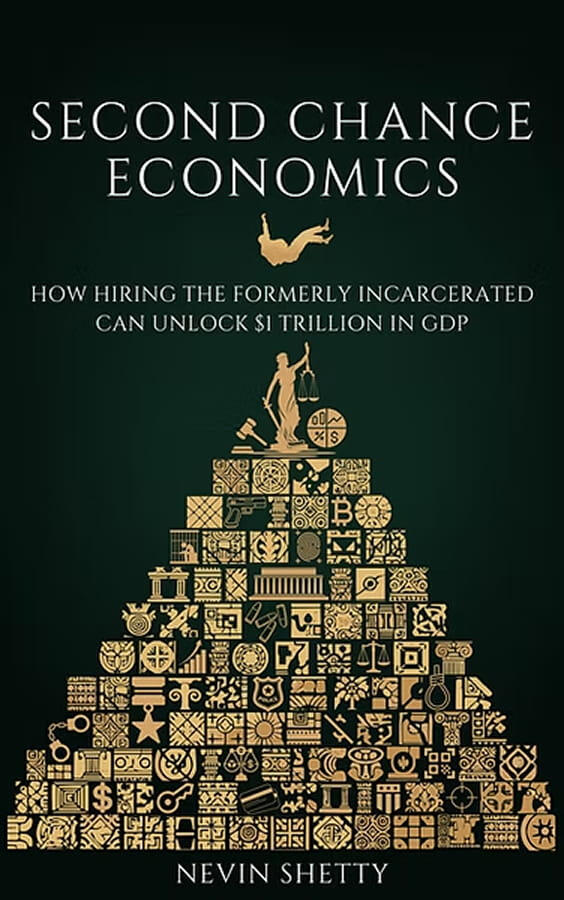
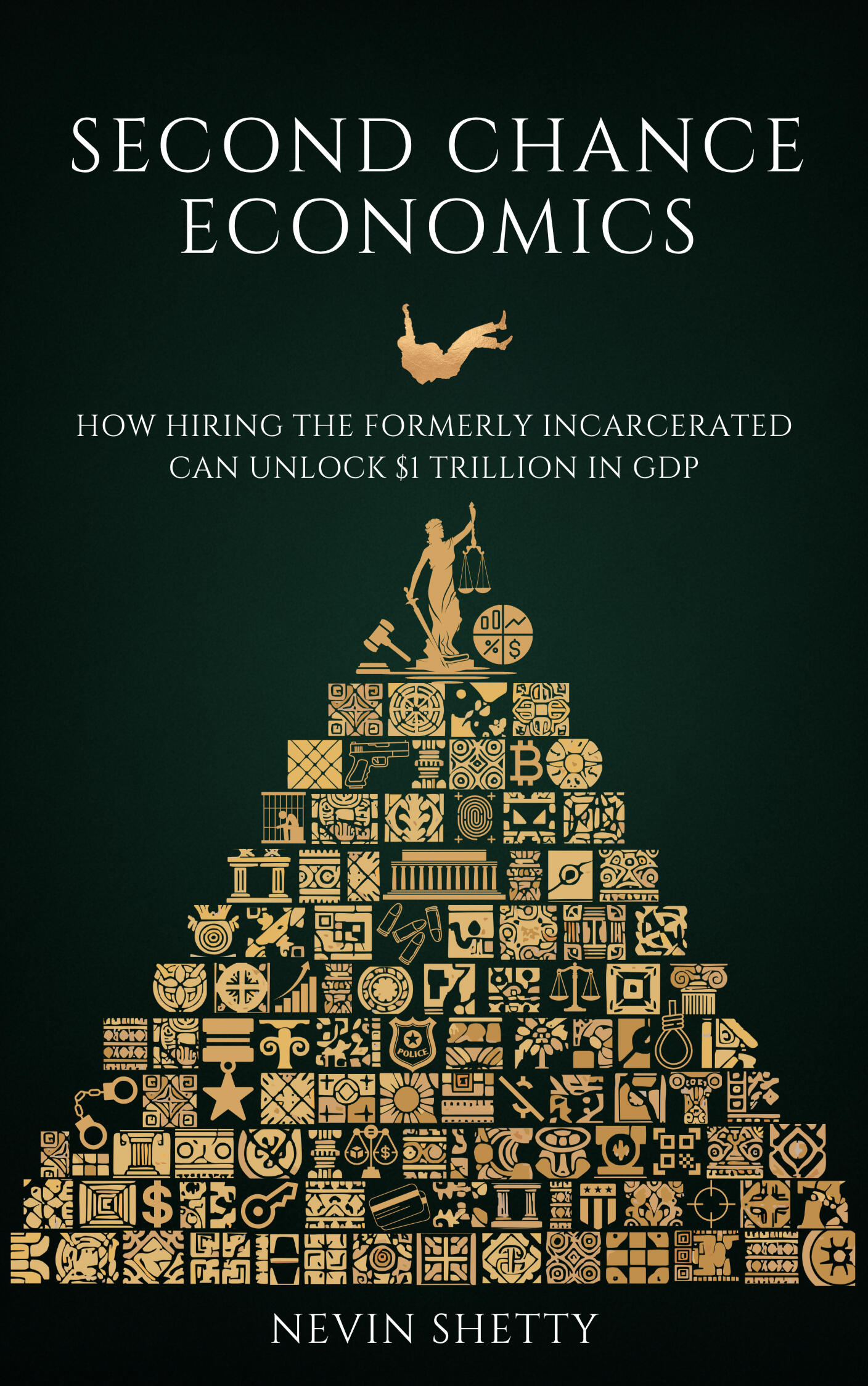
Second Chance Economics
Told in rigorous, data-driven prose, Second Chance Economics uncovers the nature of potential, profit, and how instruments of change and growth can come from the unlikeliest of places.
ARTICLES





Public Filings From Case
The following are excerpts from public court filings and trial transcripts.
Excerpts From Trial Brief
“This case is about a company seeking to criminalize a business decision that went catastrophically wrong. When an investment failed due to massive third-party fraud, the company did not treat it as what it was—a failed investment. Instead, the company hired a former Department of Justice prosecutor to lobby federal authorities to bring criminal charges against its former CFO who made the investment. And it did so even though, as the government admits, the CFO was duped by the third-party into thinking the investment was not risky."
"Mr. Nevin Shetty served as Chief Financial Officer of Fabric, Inc., where he was entrusted with managing the company’s finances and making investment decisions on its behalf. In April 2022, Mr. Shetty invested a portion of Fabric’s funds [along with his life savings] in TerraUSD (UST), an algorithmic stablecoin, genuinely believing it to be a safe, conservative investment that would generate significant returns without risking principal. He conducted extensive research, relied on representations of what appeared to be a legitimate investment opportunity backed by sophisticated technology, documented the investment properly on the company’s books, and made the investment in what he believed was the company’s best interest. When the Terra ecosystem collapsed in May 2022 due to Do Kwon’s fraud, Mr. Shetty called a meeting with the CEO to explain what had happened."
"What followed was not a measured response to a failed investment, but rather a coordinated campaign by a company seeking to criminalize an executive’s business judgment. Fabric hired a former Department of Justice prosecutor who lobbied federal authorities to bring charges, and suggested Mr. Shetty might flee the country—none of which was true. Yet when it came time to report the loss to the IRS, Fabric classified it exactly as what it was: an investment loss."
"The funds were invested on Fabric’s behalf, remained in Fabric’s possession and control throughout, and were reflected on Fabric’s books as a company investment. Fabric employees had access and credentials to the investment account. The investment was documented in a Treasury Account Agreement signed by Mr. Shetty on behalf of Fabric. The money never left Fabric’s control—it was simply invested in a different vehicle, just as it would have been had Mr. Shetty placed it in a treasury program at Fidelity (or another financial firm). Put simply, at all times, Fabric remained in legal title and possession of their funds."
"Moreover, the government has confirmed to undersigned counsel that there is no allegation that Mr. Shetty ever converted Fabric’s $35 million principal to his own or ever planned to do so. And the government’s own trial brief confirms that, while Mr. Shetty and his partner intended to profit from Fabric’s HighTower investment through excess interest, they did not plan to obtain Fabric’s principal. The government’s trial brief acknowledges that HighTower was a legitimate going concern and “was envisioned as a decentralized finance investment platform that invested in cryptocurrency protocols such as Anchor.” (Dkt. 202 at 3.) And that Mr. Shetty and his co-founder “envisioned an investment platform that would assist customers in converting USD into cryptocurrency to then be invested through the Anchor protocol or other DeFi protocols. In a separate pleading, the government conceded that Mr. Shetty “must have believed UST was a worthwhile investment, and that his scheme would make everyone rich, or else he would not have done it.”
"The government has not identified any statute, regulation, or other law that required Mr. Shetty to make the specific disclosures it now claims were mandatory. Even assuming Mr. Shetty had some duty to disclose information to Fabric’s board, the government has never specified what facts he was required to disclose, to whom, and when. Was he required to disclose that he planned to invest in a stablecoin? That the investment would be made through HighTower? That HighTower would earn carry? The government’s vague allegations leave Mr. Shetty unable to defend against a moving target."
"Mr. Shetty’s minority ownership stake in HighTower is not criminal. Using a company in which one has a financial interest to provide services is not criminal. Earning compensation for providing investment management services is not criminal. Every self-dealing transaction involves some financial benefit flowing to the self-dealer, but self-dealing is not wire fraud. The jury must be clearly instructed that undisclosed self-dealing cannot satisfy any element of wire fraud. Without such an instruction, there is a substantial risk that the jury will convict Mr. Shetty for conduct that the Supreme Court has held is not a federal crime."
Excerpts From Motions in Limine
"The government wants to convict Mr. Shetty for wire fraud, but it cannot seem to decide what the fraud actually is. But it has decided its trial strategy: throw mud at the wall and hope something sticks. The centerpiece of this strategy is evidence that Mr. Shetty owned a minority stake in HighTower, the platform that invested Fabric’s money. The government plans to use this ownership evidence to “dirty up” Mr. Shetty with accusations of self dealing—even though the government has conceded that “the crime is not the self-dealing.” Given these circumstances, and the government’s shifting positions, the likelihood of jury confusion is already high."
"The sheer magnitude of the loss here creates particular risks. Jurors confronted with evidence that an employer lost $35 million may feel compelled to hold someone accountable for that loss, even if the government has not proven the elements of wire fraud. But evidence of poor investment performance inevitably invites jurors to convict based on the theory that Shetty was a bad investor or made poor business decisions—conduct that may be grounds for termination or civil liability but not federal criminal liability."
"The jury could easily be swayed by the natural tendency to rely on hindsight bias rather than examining the evidence of Shetty’s state of mind at the time he made the transfer—which is the only proper way to evaluate his intent. In addition, jurors may instinctively assume that large financial losses indicate wrongdoing, even when the loss has no logical connection to the defendant’s mental state. This natural but erroneous assumption would lead jurors to conclude that because the investment failed, Shetty must have acted with fraudulent intent—a conclusion that does not follow from the evidence and conflates investment acumen with criminal intent."
"Individual board members’ personal opinions about cryptocurrency, their own investment preferences, their own views of Shetty’s specific investment decisions, and their interpretation of corporate policies—including those tainted by hindsight—are irrelevant to any viable fraud theory and would unfairly prejudice Shetty by inviting the jury to equate personal opinions and corporate policy disagreements with criminal intent."
Excerpts From FBI Agent Beckley Trial Testimony
“Q. You started this investigation in May of 2022; correct?A. Yes.
Q. And at that time, you had been a special agent for less than a year?
A. Yes.
A. Actually, a couple weeks.
Q. Oh, a couple weeks.
Q. And so on the "to" line it says, Student SA, a student special agent. But that's just because your e-mail hadn't switched over at the time.
A. Yes.
Q. You understand that sometimes there are witnesses whose may want to tell you something because it benefits them?
A. Yes.
Q. That witness bias is one of the things you're trained on as an agent in interrogations; correct?
A. It could be, yeah.
Q. There's lots of things you're trained on when it comes to witness issues; correct?
A. Yes.
Q. One of the other issues is you don't want – certainly don't want witnesses to contaminate the memories of other witnesses, would you?
A. No.
Q. Okay. And in fact, you're trained specifically that when you're interviewing percipient witnesses to a case, you should do so separately; correct?
A. It depends on the circumstances.
Q. Can you think of a circumstance where it would be better for the integrity of the fact-finding process to interview two percipient witnesses together?
A. So a -- an interview is a voluntary process. If individuals want to provide that information with another individual, they're free to do so if they're willing to provide that information.
Q. Ms. Beckley, I'm asking a different question. I understand that some people might want to be present with other people in witness interviews. I'm asking whether it is best practice, in your understanding, that it is proper to separate witnesses so that they do not contaminate the memories of other witnesses when you're doing interviews.
A. It depends on the case and the circumstances.
Q. So I'll ask the question I asked again, which you did not answer. Can you think of a circumstance where it would actually help the fact-finding process and the integrity of the evidence for two witnesses to be interviewed together at the same time?
A. An interview is a voluntary process.
Q. I understand that. So you're saying that the time might be when they're not willing to be separated?
A. It depends on the circumstances.
Q. Okay. So can you tell me a circumstance where it might be useful to interview two witnesses to the same event together?
A. I can't think of a hypothetical right now.
Q. None of the witnesses that you interviewed, did you interview under oath; correct?
A. No.
Q. Okay. But you don't actually swear them in. There's not a court reporter sitting there; right?
A. No.
Q. You agree with me now that this statement that "Shetty made these transfers without the knowledge of anybody else at Commerce Fabric", that's not true; correct?
A. That is accurate. [cleaned up for readability]
Q. About the wire transfers, specifically. You now know that Alice Leung knew about the wire transfers that were happening; correct?
A. Yes.
Q. And she knew at such time, that she could actually put them in the books and records of Fabric at the time; correct?
A. Yes. it was generally understood that she did know about HighTower; yes.
Q. So your understanding was that these coins, which we now know have been sitting with Commerce Fabric for five months. You believe, based on all the investigation you had done, from May 20th until September 29th, in your best judgment, they were on Shetty's private computer or phone?
A. Based on the information I had at the time of the affidavit, yes. And I see that I'm wrong, based off this e-mail. And I admit that. [cleaned up for readability]
Q. You could have done a whole number of things to determine that what you told the that magistrate judge, was absolutely false. You could have, for example, said, Hey, Fabric, can I please see all the e-mails with HighTower? Right?
A. I requested that information.
Q. Did you do it by subpoena?
A. I did not.
Q. Okay. You just trusted them?
A. Generally, the victim company provides information on a voluntary basis.
Q. Okay. If someone tells you a conversation and they say, I don't know something, as an investigator, would you agree with me that it is pretty important to then follow up and find out why they don't know, if they might know later, if somebody else knows?
A. Yes.
Q. You did none of those things, with respect to the Terra coin, the 35,180,000 Terra coin at issue in this case?
A. No.
Q. Did you tell the grand jury “Well, they just didn't sell it on the chain, but they have all the coins”. Did you tell them that?
A. I don't remember everything that I said in the grand jury.
Q. It's fair to say, Agent Beckley, that you missed that; right?
A. I was relying on the representations of Fabric's attorneys.
Q. Is that what a good agent does, rely on one side to a dispute?
A. There were a lot of facts that went into that affidavit. That was one of them.
Q. You would agree that, though, you relied on Fabric, and that reliance led you to provide the magistrate judge with false information?
A. No. It was information that I was aware of at that time.
Q. Ms. Beckley, you understand the magistrate judge was told that it is likely that those coins were at my client's house. That's what you told him.
A. That was my belief at that time, yes.
Q. I understand. That turned out to be false information; correct?
A. But I can admit that I did not see that e-mail. I can admit when I'm wrong. And I was wrong."
Terra Luna Crypto Network
What is Decentralized Finance ("DeFi")?
Most people know cryptocurrency as a speculative investment
I.e., you invest in Bitcoin simply for the expected price appreciation
However, there is a whole universe of cryptocurrency called decentralized finance (DeFi):
DeFi democratizes access to financial products by allowing two parties to conduct financial transactions via smart contracts without a third party intermediary (e.g. a bank)
DeFi exploded on the scene, growing from $0 to $250B in deposits in just two years1
DeFi was projected to expand at an annual growth rate of 42.5% from 2022 to 20302
What Are Stablecoins?
A stablecoin is a cryptocurrency pegged to a reference asset like the USD or gold
Stablecoins offer the advantages of crypto while offering the stability of fiat money
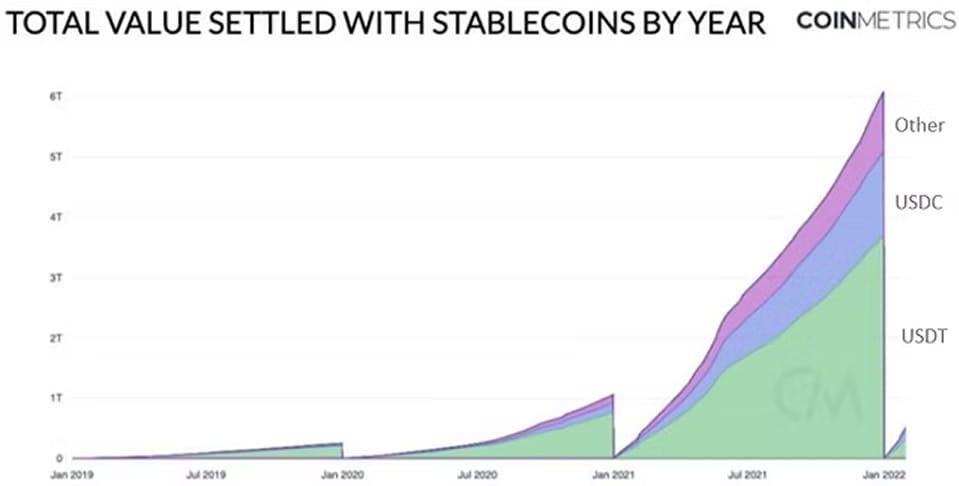
Stablecoins are a large and critical part of the crypto ecosystem
200+ stablecoins globally3
$180B of circulation4
In 2021, $6T of settlement5
What is the Terra Luna Network
A blockchain platform that powered a network of decentralized stablecoins
Founded by Do Kwon, a former Stanford University computer science graduate
The Terra Luna network had a market cap of $60B with a thriving ecosystem
The suite of applications offers low fees, instant settlement, and efficient exchange

Payment processing application
Over 2.4M users in South Korea
Processes over 130K transactions daily

Synthetics trading platform
Over $2.2B USD of collateral held

Savings & lending platform
Over $14B USD in deposits at peak
The Terra Network Was Large
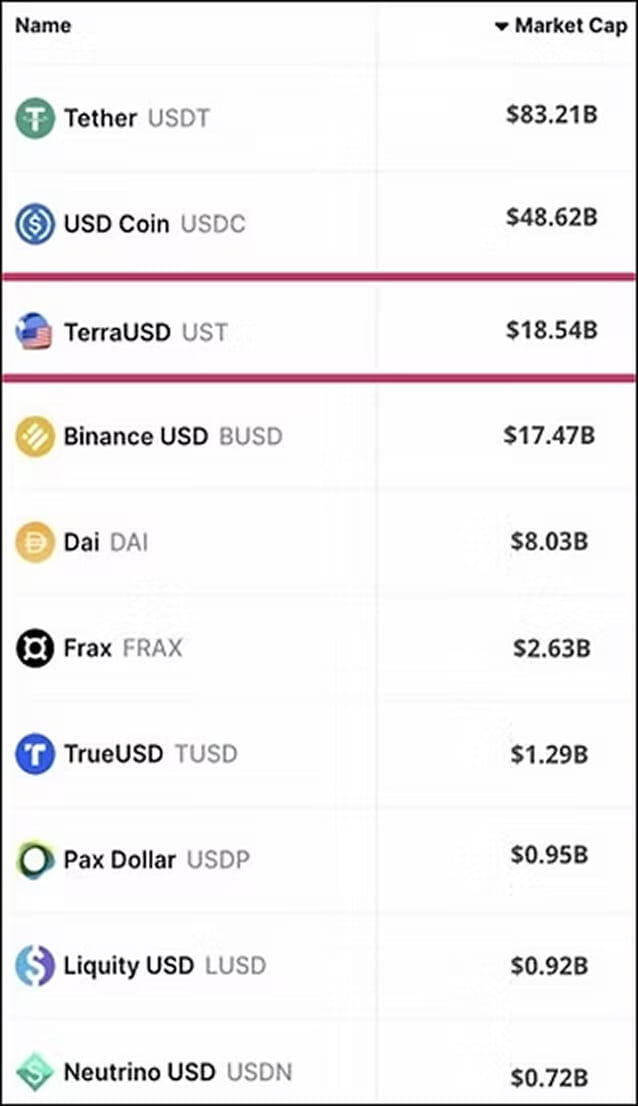
In April 2022, the Terra Luna network total market cap exceeded $60B
At the time, UST was the 3rd largest stablecoin with $18B market cap
There were only 7 stablecoins with over $1B in market cap
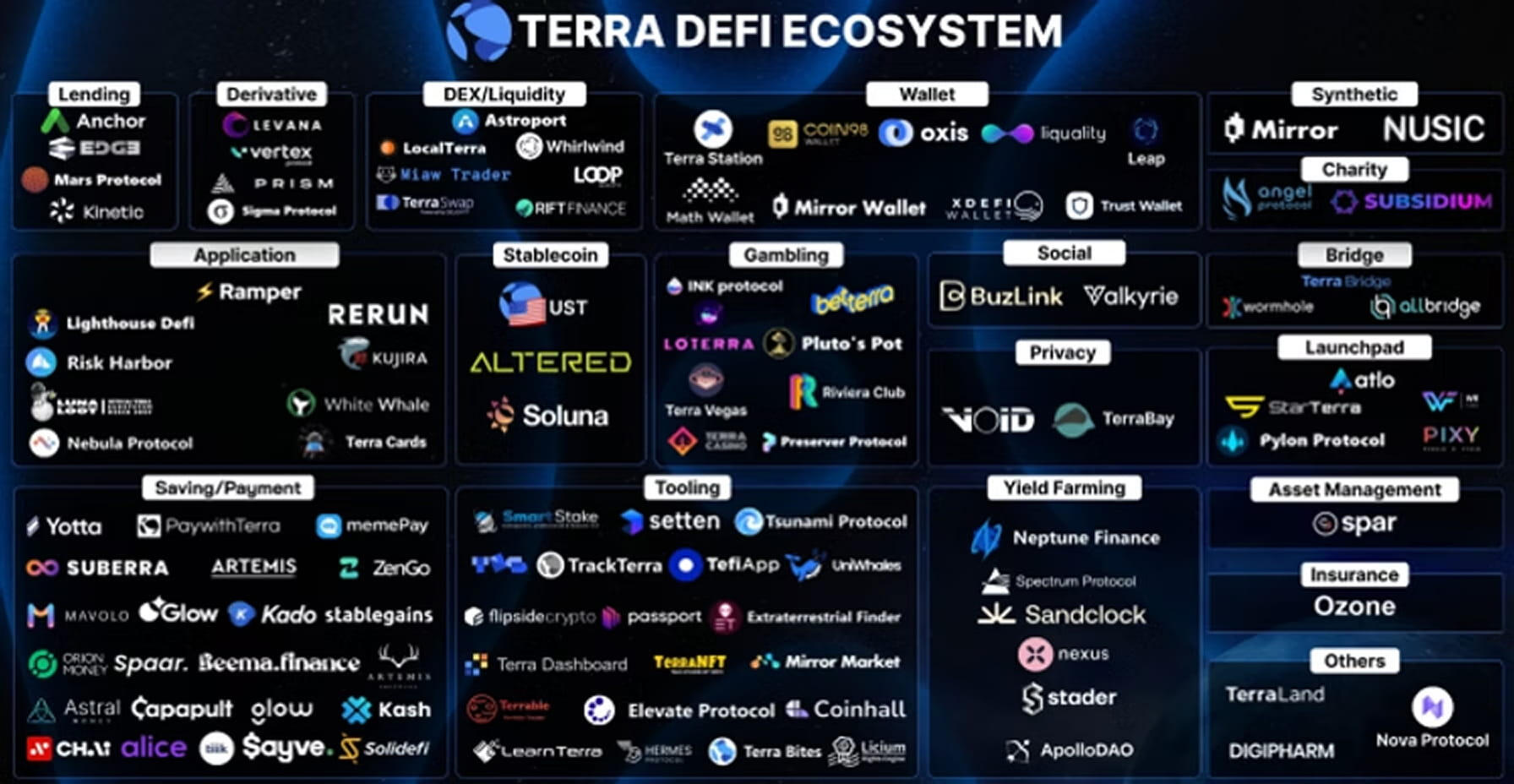
The Terra ecosystem consisted of over 50 consumer facing apps
Terra Luna's Impressive Partnerships
In August 2018, Terra partnered with 15 e-commerce companies in Asia that totaled $25B in transaction volume and 40M customers to offer UST as a payment option
In June 2019, Terra partnered with Chai, a Korean based mobile payment app, which had facilitated over 2.7M transactions to its 500K users over the Terra blockchain
In February 2022, Terra announced a five-year $40M partnership with the Washington Nationals baseball team with the Nationals planning to accept UST as a payment option


What Was Anchor Protocol?
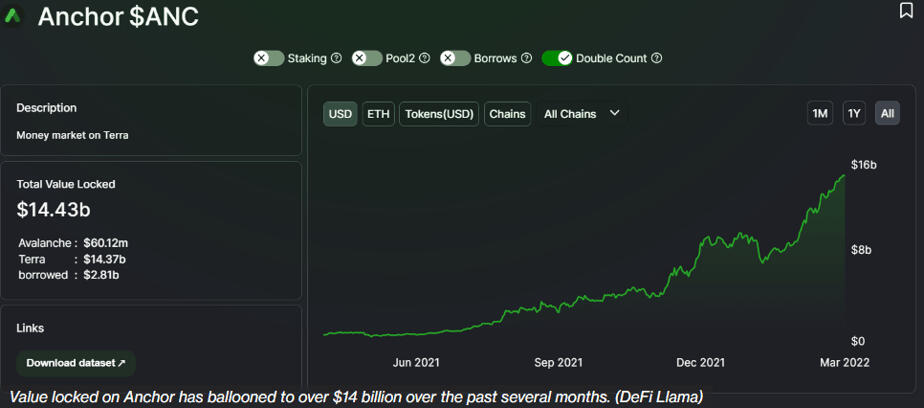
Anchor was marketed as a "principal protected savings account" on the Terra Blockchain
Offered a floating interest rate based on supply / demand – was 19.5% in March '22
Total value locked on Anchor Protocol peaked at over $14 billion in April '22
“Anchor’s interest rates are generated via staking rewards from major proof-of-stake blockchains and are hence considered more stable than money market interest rates.” – CoinDesk
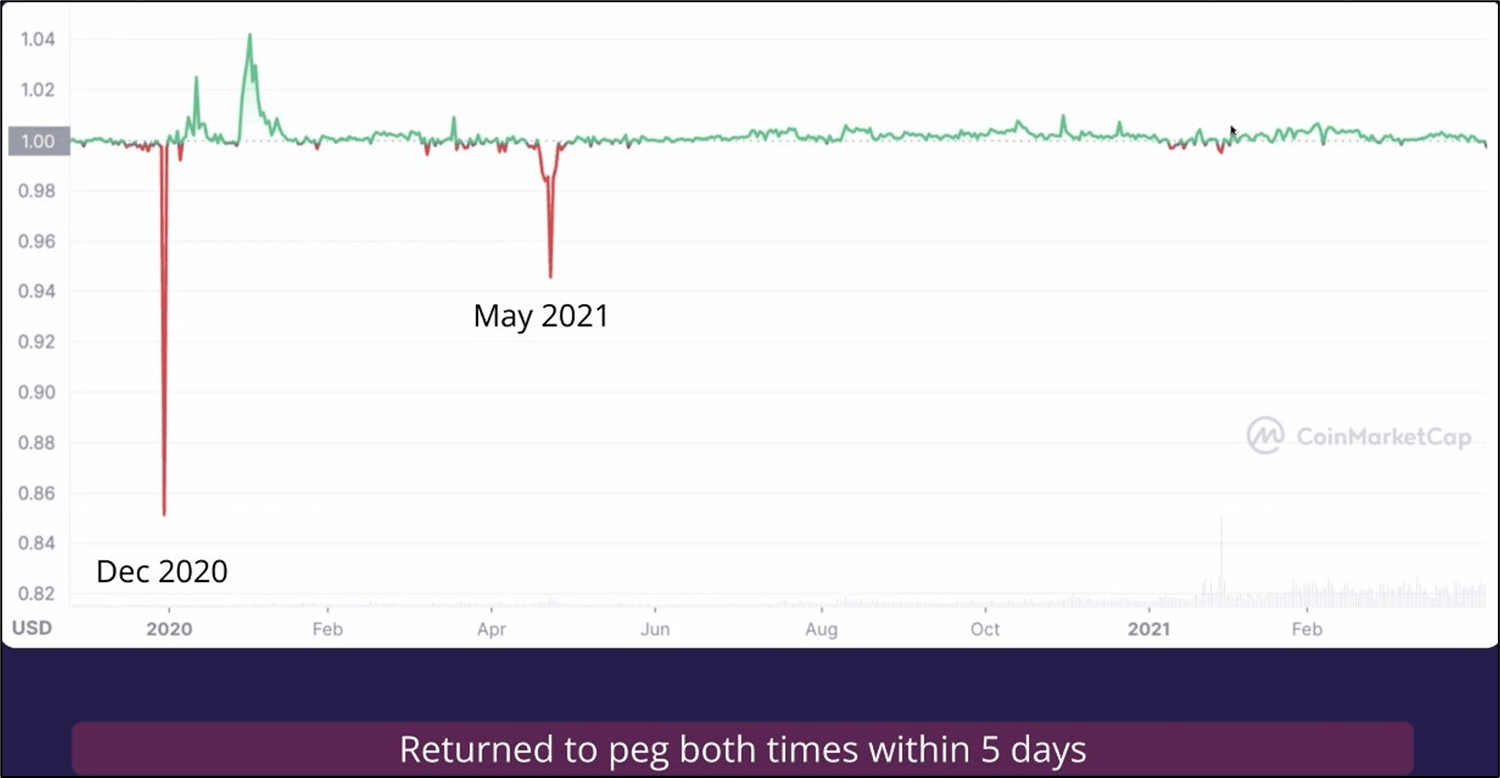
UST Was a Resilient Stablecoin
UST depegged from $1 in the past but returned to the peg each time
Reasonable Investment Decision at the Time
The size of the Terra Luna Network platform exceeded $60B+
The size of the UST stablecoin exceeded $18B+
The size of the Anchor protocol exceeded $14B+ in deposits
Partnership with 15 Asian e-commerce companies
Partnership with Korean based mobile payment app Chai
Partnership with the Washington Nationals baseball team
Resilient and battle tested algorithmic stablecoin mechanism
Nevin thought investing on the Anchor platform within the Terra Luna network was a prudent investment that would generate stable returns - he was wrong
May 2022
Terra Luna Network
Experiences a Catastrophic Collapse
Loses $60 Billion in four days
Do Kwon Manipulated All The Reasons That Nevin Invested
SEC Charges
"Terraform and Kwon disseminated false statements about Chai in investor presentations, press releases, blogs, public and private chat forums, social media accounts, and interviews."
"UST did not automatically “self-correct.” Rather, Terraform and Kwon manually propped up UST to make it appear as if it had re-pegged on its own. Id. ¶ 118, 154, 162."
DOJ Charges
“KWON agreed with others to defraud individuals … by deceiving those individuals about aspects of the Terra blockchain, including its technology and the extent to which it had been adopted by users. ¶ 1"
"KWON “deceiv[ed] those purchasers about the effectiveness of the algorithmic mechanism that purportedly ensured the stability of UST’s (TerraUSD) price through false statements and market manipulation.” ¶ 9"
Second Chance Economics
The Untapped Economic Opportunity
Second Chance Economics challenges the conventional conversation around criminal justice by focusing on a different question: What is the economic cost of overlooking millions of capable workers?In the United States, more than 77 million people have a criminal record, creating one of the largest underutilized talent pools in the economy. The barriers to employment don't just affect individuals—they contribute to labor shortages, higher turnover, reduced productivity, and an estimated $1.2 trillion annual economic burden.The book presents a data-driven framework showing how second chance hiring can:• Address persistent workforce shortages
• Reduce hiring and turnover costs
• Increase business revenue and net income
• Create long-term growth for the American economyRather than viewing second chance hiring as charity, Second Chance Economics reframes it as a strategic business and economic opportunity.
Who Should Read This Book?
Whether you're shaping policy or building a business, Second Chance Economics offers practical insights backed by research, financial analysis, and real-world examples.
Business Leaders
Learn how leading employers are turning an overlooked talent pool into a competitive advantage while reducing labor costs, increasing revenue, and improving net income margins.
Policymakers & Community Leaders
Explore how employment-driven solutions can reduce recidivism, increase tax revenue, and generate measurable economic returns.
Economists & Investors
Understand the hidden costs of workforce exclusion and the significant economic value that can be unlocked through broader labor force participation.
Anyone Interested in the Future of Work
Gain a fresh perspective on one of America's largest untapped economic opportunities—and why expanding access to employment benefits everyone.
Publications
MY BOOKS
Corporate Culture in the Digital Era
I'm a paragraph. Click here to add your own text and edit me. Let your users get to know you.
Why Do We Act Like This?
I'm a paragraph. Click here to add your own text and edit me. Let your users get to know you.
Big Boss,
Little Boss
I'm a paragraph. Click here to add your own text and edit me. Let your users get to know you.
MY ARTICLES
The New Workplace Terminology You Have to Know
I'm a paragraph. Click here to add your own text and edit me. Let your users get to know you.
5 Signs Your Organization Must Change Its Workplace Culture
I'm a paragraph. Click here to add your own text and edit me. Let your users get to know you.
The Secret for Ongoing Motivation
I'm a paragraph. Click here to add your own text and edit me. Let your users get to know you.
Why Hard Work Is Not Enough
I'm a paragraph. Click here to add your own text and edit me. Let your users get to know you.